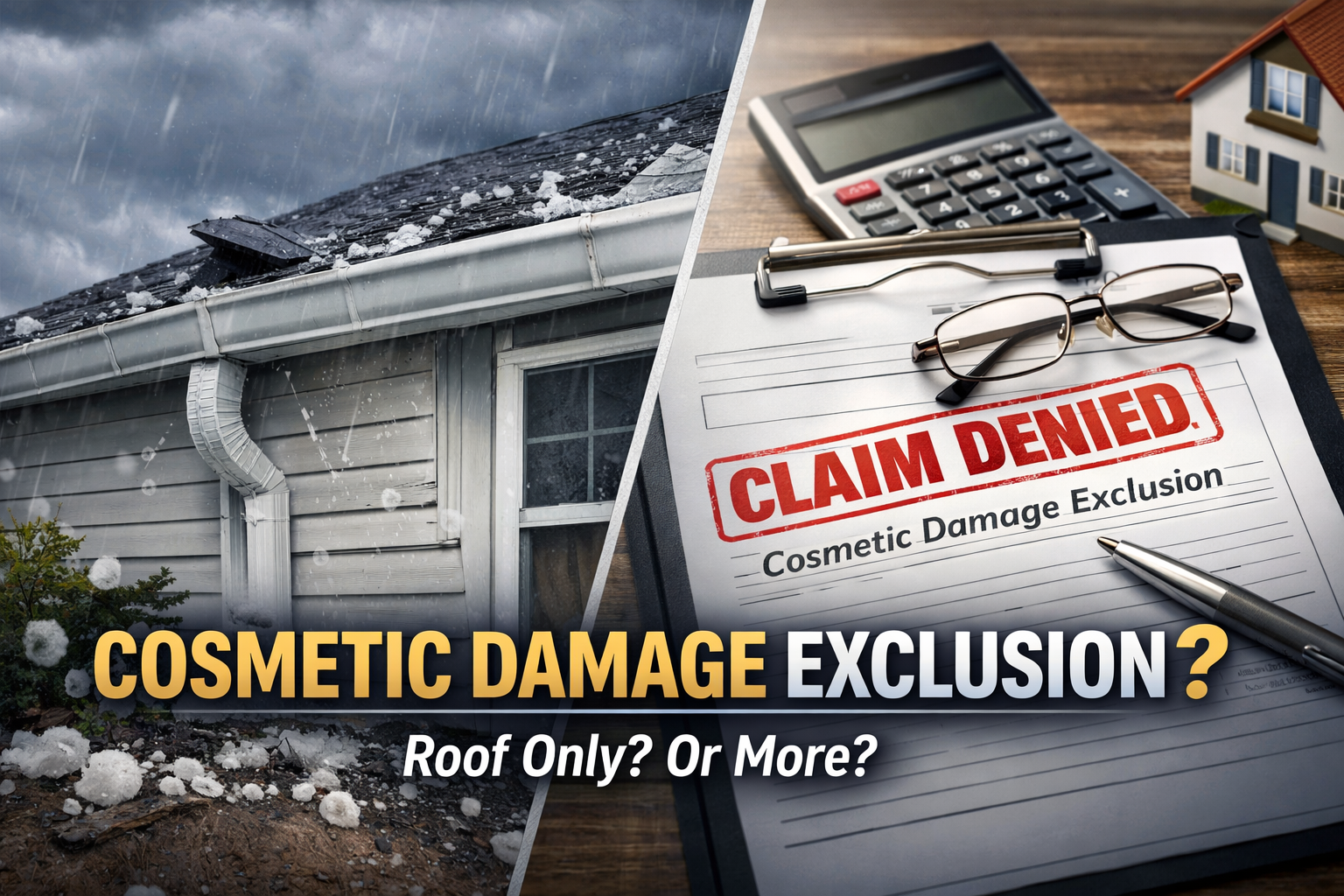
The “Cosmetic Damage Exclusion” Trap in Hail & Storm Insurance Claims
One of the most common excuses insurance companies use to deny hail and storm damage claims is something called a “cosmetic damage exclusion.”
If you’ve ever been told your storm damage isn’t covered because it’s “cosmetic,” you’re not alone.
But here’s the problem: many policyholders—and even some adjusters—don’t actually understand what the cosmetic damage exclusion really applies to.
And that misunderstanding can cost homeowners thousands of dollars.
What Is a Cosmetic Damage Exclusion?
In property insurance, cosmetic damage generally means damage that affects the appearance of a building component but not its functional performance.
For example:
- Small dents in metal roofing
- Surface pitting from hail
- Scuffs or visible marks that don’t cause leaks
If the roof still functions as a barrier against water and weather, some policies may classify that type of damage as “cosmetic.”
Because of this, many insurance companies add endorsements that exclude cosmetic hail damage from coverage, particularly on roof coverings.
But here’s the critical detail that often gets overlooked.
The Exclusion Often Applies ONLY to the Roof
Many cosmetic damage exclusions are specifically written for roof coverings only.
For example, Texas policy endorsements may exclude “cosmetic loss or damage to roof coverings caused by hail,”meaning damage that alters appearance but does not cause leaks or functional failure.
Notice what that language says:
Roof coverings.
Not the entire exterior of the property.
Yet in real-world claims, insurers frequently attempt to stretch this exclusion far beyond what the policy actually says.
Where Coverage May Still Exist
Even when a policy contains a cosmetic roof damage exclusion, other exterior components may still be covered, including:
- Siding
- Gutters
- Downspouts
- Window trim
- Metal flashing
- HVAC fins
- Exterior fixtures
If hail damages these items, the cosmetic exclusion may not apply at all, depending on the policy language.
In other words:
The roof might be excluded — but the rest of the damage may still be covered.
Unfortunately, many homeowners accept the denial at face value without reviewing the actual policy language.
Why This Happens So Often
Cosmetic damage exclusions became more common as hail claims increased across the United States.
Insurance carriers began using these endorsements to reduce claim payouts for visible but non-functional roof damage.
The result is a gray area where insurers may classify storm damage as “cosmetic” even when it:
- Reduces property value
- Shortens the lifespan of materials
- Causes matching issues
- Creates functional concerns over time
That’s why these claims frequently become disputes between policyholders and carriers.
What Property Owners Should Do
If your hail or storm claim was denied due to a cosmetic damage exclusion:
- Read the policy endorsement carefully
Identify exactly what components the exclusion applies to. - Check whether the exclusion is limited to the roof
Many policies are written this way. - Document all damaged property components
Don’t assume the denial applies to everything. - Have the claim evaluated by a professional
A public adjuster can determine whether the denial aligns with the policy language.
The Bottom Line
The phrase “cosmetic damage exclusion” sounds simple—but in practice it’s often misunderstood and misapplied.
In many cases:
- The exclusion applies only to roof coverings
- Other storm damage to the property may still be covered
Understanding the difference can make the difference between a denied claim and a paid one.
If you’re dealing with a storm damage claim in Texas and want an expert review of your policy and damages, the team at SAPIA — Seth Allen Public Insurance Adjusters can help you evaluate your options and ensure the carrier is honoring the policy correctly.
Leave a Reply