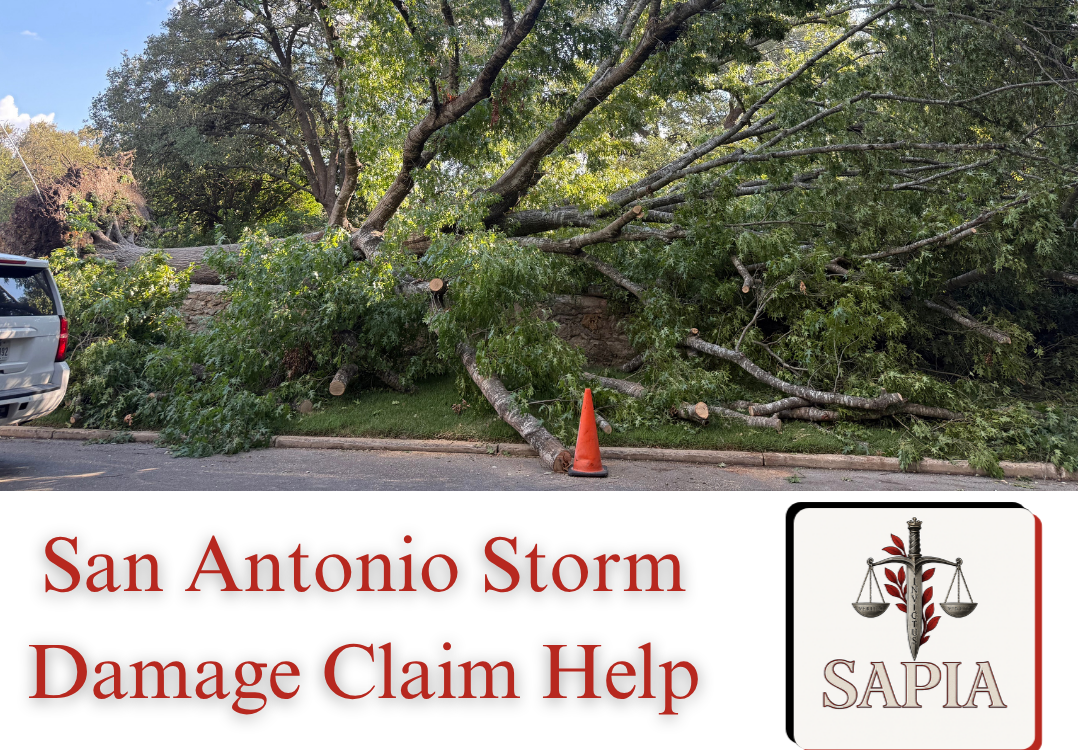
San Antonio homeowners: Please read this
San Antonio Storm Damage: What to Do After the August 28 Storm
If a tree hit your house, water came through the roof, your power or AC is still out, you are staying in a hotel, or you have no idea what your insurance may do to help, take a breath.
You do not have to figure everything out tonight.
I am Seth Allen. I am a local San Antonio Public Insurance Adjuster, and I wrote this to help my community understand what to do next without burying you in insurance language.
What we know about the San Antonio storm
The August 28 storm caused serious wind and tree damage across parts of San Antonio.
The National Weather Service reported widespread tree damage in a corridor running from northeast Bexar County through central San Antonio and into southwest Bexar County. Measured winds reached 50 to 65 mph, with smaller areas estimated near 75 mph. Roof, fence, power-line and utility-pole damage was also reported.
Alamo Heights and Terrell Hills were included in an earlier weather statement for strong wind and small hail. Local reporting documented damage in the West Side and Monte Vista areas.
That does not mean every home in those neighborhoods, or nearby Olmos Park, was damaged. The storm hit different streets differently. Your property needs to be evaluated based on what actually happened there.
What I would do first at my own house
-
Make sure everyone is safe.
Do not climb onto a wet roof, walk beneath a damaged tree or enter an area that may be structurally unsafe. -
Stop more damage from happening.
Get emergency help if the roof needs a temporary covering, a broken opening needs to be secured or water needs to be removed. Do not delay reasonable emergency work just to wait for an insurance inspection. -
Take photographs and video before cleanup.
Take wide photographs of every affected area. Then take close photographs of the actual damage. Video where the water entered and where it traveled. -
Save everything.
Keep receipts for tarping, water removal, tree work, generators, hotel rooms, storage and other storm-related expenses. Whether each cost is covered depends on the policy and facts. -
Write down what happens next.
Keep a simple record of every contractor visit, insurance call, inspection, document request, payment and decision.
The Texas Department of Insurance gives similar guidance: photograph the damage, prevent additional damage and keep your receipts.
Will insurance pay for my hotel if my power or AC is out?
It might, but a power outage by itself does not automatically mean hotel expenses are covered.
Coverage may depend on why the home is not safe or fit to live in, whether covered physical damage occurred at the property, what your policy says about Additional Living Expenses and whether any exclusions apply.
If you are already paying for a hotel, Airbnb, meals, pet boarding or other temporary living costs, save every receipt. Call your insurance company or a licensed Public Insurance Adjuster and ask what documentation is needed.
Do not let anyone promise that these expenses will be paid. The policy and facts have to be reviewed first.
Does insurance cover water coming through the roof?
It may.
Rain entering through an opening created by wind or a falling tree can present a different coverage question from surface flooding, long-term leakage, wear, poor maintenance or faulty construction.
The fact that water appeared inside tells us where the damage showed up. It does not always tell us why the water entered.
Protect the interior, arrange emergency work and document the opening and water path. Coverage depends on the specific policy language, cause of loss, endorsements, exclusions and deductible.
What if a tree fell on the house?
Photograph the entire tree, its base, the impact point and every damaged part of the property before removal when it is safe to do so.
A tree company may need to coordinate with a roofer, structural contractor, engineer or utility crew. Ask for itemized invoices that separate tree removal from roof, framing, interior and temporary repair work.
Many policies may cover resulting damage when a tree falls because of a covered wind event. Tree-removal coverage may be limited. The TDI fallen-tree guide is a useful place to start.
If you have not filed a claim yet
You should report a loss promptly and follow your policy’s notice requirements. Before giving a detailed description, try to understand these four things:
- What happened and what you still do not know.
- What parts of the property appear damaged.
- Which deductible may apply.
- What emergency work has already been performed.
You do not need a final construction estimate before reporting a loss. You also do not need to guess about the cause, coverage or full repair cost.
Filing a claim that was never covered can create an unnecessary claim record. Failing to report a covered loss promptly can create a different problem. That is why reviewing the policy and basic facts first can be valuable when time allows.
If you already filed, that is okay
You can still get help understanding what happens next.
SAPIA can review the policy, the insurance company’s estimate, the inspection history, any payments and the damage that still needs to be addressed.
We can also help you understand what the insurance company is asking for, what documents may be missing and whether the repair scope appears to match the property.
If the insurance estimate seems too low
Put the carrier’s estimate beside the actual damage and qualified contractor estimates. Compare them line by line.
- Are every damaged room, roof slope and exterior area included?
- Are the measurements correct?
- Do the listed materials match the home?
- Are removal, access, drying and debris costs included?
- Was hidden damage found after the first inspection?
- Does the estimate explain depreciation and the deductible?
A contractor’s higher price does not automatically prove that the insurer is wrong. The important question is why the estimates differ and which scope is supported by the evidence.
Document those differences and request a supplement or reinspection in writing. TDI also explains what homeowners can do when an insurance payment does not appear sufficient.
If the claim was denied, send it to us for a free review
Even if you believe the denial might be correct, it is reasonable to have someone review it.
SAPIA can look at the denial letter, the cited policy language, the evidence and what actually happened at the property. We can help you understand whether the decision appears consistent with the policy and facts.
If the claim needs legal advice or involves a legal dispute outside a Public Adjuster’s role, that issue should be reviewed by a qualified attorney.
No outcome is guaranteed.
Large and high-value home claims need more detail
A major residential loss is rarely just a roof number.
In Olmos Park, Alamo Heights, Terrell Hills, Monte Vista and other San Antonio neighborhoods, a home may include custom windows, specialty roofing, stone, millwork, cabinetry, continuous flooring, advanced electrical or HVAC systems and valuable contents.
Not every property has these features. If yours does, the repair estimate should account for what is actually there instead of using a generic allowance that does not match the home.
Hidden moisture, structural damage, temporary housing and multiple contractors can also make a large claim harder to document. That is when a one-page estimate may not tell the whole story.
What does a Public Insurance Adjuster do?
The insurance company has adjusters working on its claim-handling process.
A licensed Public Insurance Adjuster represents the property owner in preparing, presenting and negotiating the property insurance claim, subject to Texas law and the written contract.
A Public Adjuster does not work for the insurance company. We work for the policyholder.
I think of a good PA as an equalizer. Our job is to help the property owner understand the policy, document the damage and participate in the claim with professional representation instead of trying to handle everything alone.
A Public Adjuster is not the repair contractor and cannot provide legal advice. Texas homeowners should verify licensing and understand the contract and fee before hiring anyone. The Texas Department of Insurance explains the Public Adjuster’s role and consumer protections.
No pressure.
No obligation.
No signature required for an initial consultation.
No guarantee of any outcome.
Just straight answers from local professionals who want to help.
San Antonio storm insurance questions
Do I have to file a claim after storm damage?
No. You can inspect the damage, review the policy and deductible, and get professional advice before deciding. Do not delay emergency mitigation or ignore a policy notice deadline while making that decision.
Can SAPIA help me without requiring me to sign a contract?
Yes. SAPIA offers an initial consultation and claim review without requiring you to hire the firm or sign a representation contract.
Can I make temporary repairs before the insurance adjuster arrives?
Reasonable temporary repairs that prevent additional damage are generally appropriate. Photograph the conditions first when safely possible, keep written work authorizations and save every receipt.
Will insurance pay for my hotel or Airbnb?
It may, depending on why the home is not safe or fit to live in, whether covered property damage occurred and what the policy says about Additional Living Expenses. Save every receipt and have the policy reviewed.
Does homeowners insurance cover water coming through the roof?
It may. Coverage depends on how the water entered, what caused the opening and the policy’s language, endorsements, exclusions and deductible.
Can a Public Adjuster help after I already filed?
Yes. A Public Adjuster can generally be retained after filing to review the policy, estimate, payments, correspondence and unresolved damage. Whether representation makes sense depends on the individual claim.
What if the insurance company denied my storm claim?
Ask for the decision and cited policy language in writing. Compare the stated reason with the evidence and policy. SAPIA can provide a free initial review, but no reversal or payment can be guaranteed.
Sources and helpful links

Leave a Reply